
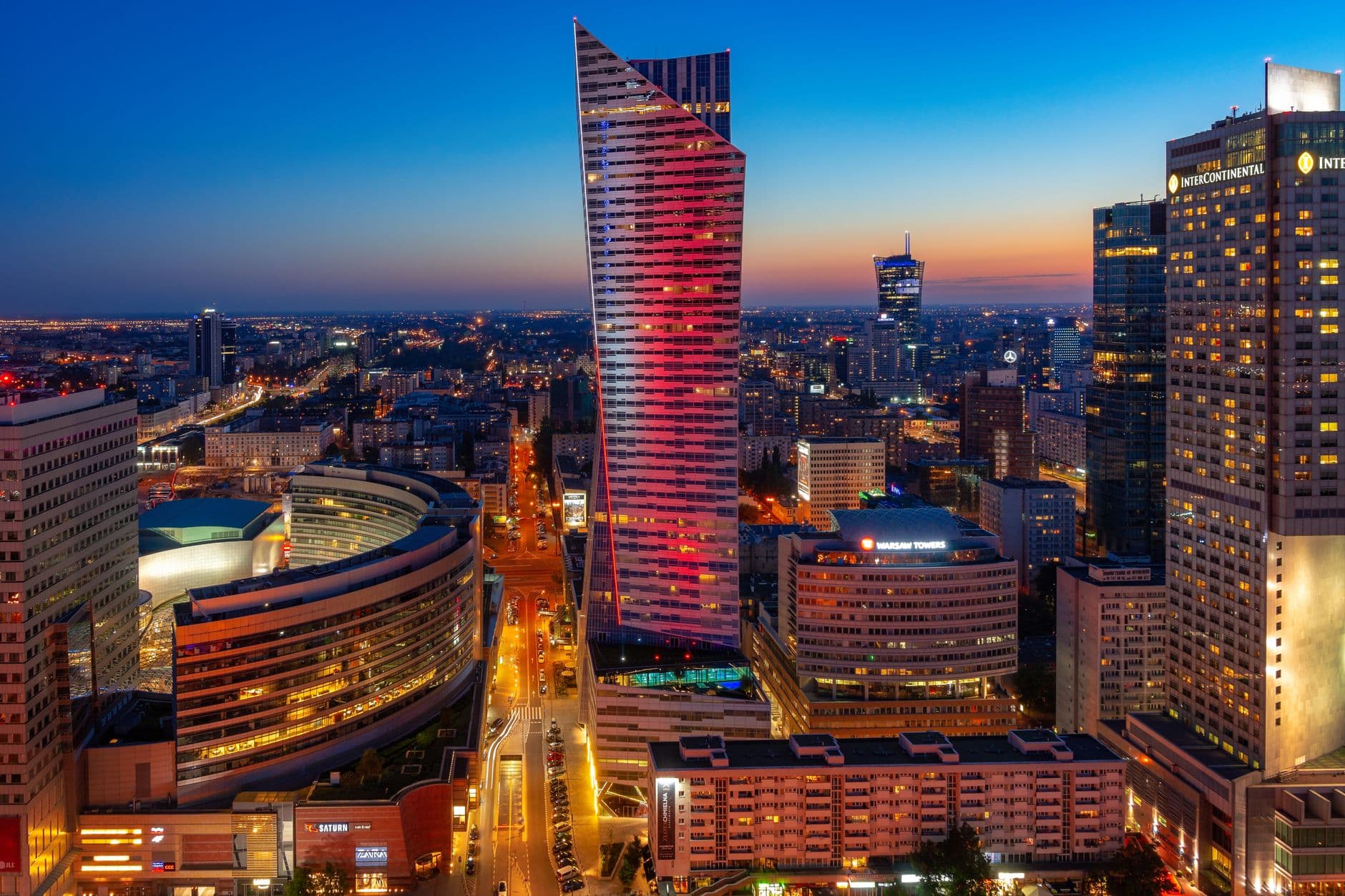
Poland’s Steady Economic Expansion Sets the Stage
Poland’s economy has demonstrated consistent outperformance relative to many European peers in recent years. Updated figures from Statistics Poland (GUS) show real GDP growth for 2025 revised upward to 3.8 percent, an increase of 0.2 percentage points from earlier estimates. Quarterly data for 2026 also saw upward revisions, with first-quarter growth at 3.7 percent and second-quarter at 4.1 percent year-on-year. These revisions reflect fuller data on corporate finances, foreign trade and government accounts.
Forecasts from multiple institutions point to continued expansion. The World Bank projects 3.6 percent growth for 2026, while the European Bank for Reconstruction and Development (EBRD) anticipates around 3.5 to 3.7 percent. The European Commission similarly forecasts 3.5 percent for the year. Growth is supported by investment, including EU recovery funds and rising defense spending, alongside resilient domestic consumption. This performance stands out against the EU average, which has been notably lower.
Investment has been a key driver, with gross fixed capital formation showing strong gains in recent quarters. Analysts note that Poland’s position as the third-largest economy in the Europe and Central Asia region covered by World Bank reports underscores its scale and stability. Nominal GDP has surpassed $1 trillion, placing the country near the threshold of the world’s 20 largest economies.
Tourism Numbers Reach New Heights
Parallel to economic gains, Poland’s tourism sector has posted record results. In the first half of 2026, 20.3 million tourists used accommodation establishments, up 7.2 percent from the prior year, with 47.2 million overnight stays, a 5.2 percent increase. Foreign tourists using these facilities rose 10.5 percent to 4.2 million. Summer months of July and August saw 10.1 million tourists, a 2.5 percent rise, generating 29.4 million overnight stays.
Poland ranked eighth in the EU for overnight stays in tourist accommodation during the first half of 2026, surpassing Portugal in that metric. Growth in nights spent outpaced the EU average of 1.7 percent by a significant margin. Data from mobile network analysis also captured 47.5 million same-day visits in the first half, including 26.3 million from abroad.
For 2025 as a whole, preliminary estimates indicate around 21.4 million foreign tourists visited Poland, up 8.5 percent, with spending by international visitors reaching 41.5 billion złoty. Total tourism-related expenditures, including domestic travel, approached or exceeded 94 billion złoty in partial-year figures, contributing meaningfully to the broader economy.
Cities and Regions Benefit from Increased Visibility
Major destinations such as Warsaw and Kraków continue to draw the largest shares of visitors. Warsaw recorded strong growth in accommodation use, with the Mazowieckie voivodeship overall seeing 7.7 million tourists in 2025, up over 12 percent. Kraków’s tourism generated substantial economic impact, with visitor spending leaving around 9.5 billion złoty in the local economy in 2025 according to local analyses.
Regional airports and secondary cities are also seeing rising interest. Flight booking data indicate strong year-on-year growth in reservations to destinations including Bydgoszcz, Lublin, Wrocław and even emerging spots, with some markets like the UK and Spain showing triple-digit percentage increases in searches. This diversification reflects broader appeal beyond traditional hotspots.
Poland’s mix of historic cities, Baltic coast, mountain regions like the Tatras, and natural areas provides variety that appeals to different traveler segments. Safety perceptions, competitive pricing compared to Western Europe, and improving infrastructure tied to economic development further enhance its profile as a value destination.
Government and Industry Push to Scale Tourism’s Role
Polish authorities view tourism as a strategic growth area. Plans aim to increase the sector’s contribution to GDP from current levels around 4-5 percent toward 9 percent over the coming decade, positioning the country as a leader in Central and Eastern Europe. Budget allocations for tourism promotion have increased, and a comprehensive national strategy with regional and thematic components is under development.
Investments in connectivity, including airport expansions and new rail links, support this trajectory. The economic momentum provides resources and stability that make Poland more attractive for both leisure and business travel. Rising household incomes domestically also boost internal tourism, creating a virtuous cycle.
Challenges remain, including seasonal concentration, the need for further international branding, and managing growth sustainably amid broader European competition. Yet the alignment of macroeconomic strength with tourism records suggests Poland is transitioning from a secondary destination to one increasingly on travelers’ radars.
Looking Ahead: Sustained Momentum or Moderation?
While near-term forecasts remain positive, some projections anticipate a modest slowdown in GDP growth to around 2.8-3 percent by 2027 as EU funds taper. Tourism growth could similarly moderate from recent peaks but is expected to remain above EU averages given structural factors. Continued investment in promotion, infrastructure and product development will determine how fully the economic rise translates into lasting travel prominence.
Poland’s story illustrates how macroeconomic resilience can amplify soft power through tourism. For travelers, it offers an increasingly compelling combination of accessibility, depth and relative affordability in a changing European landscape.